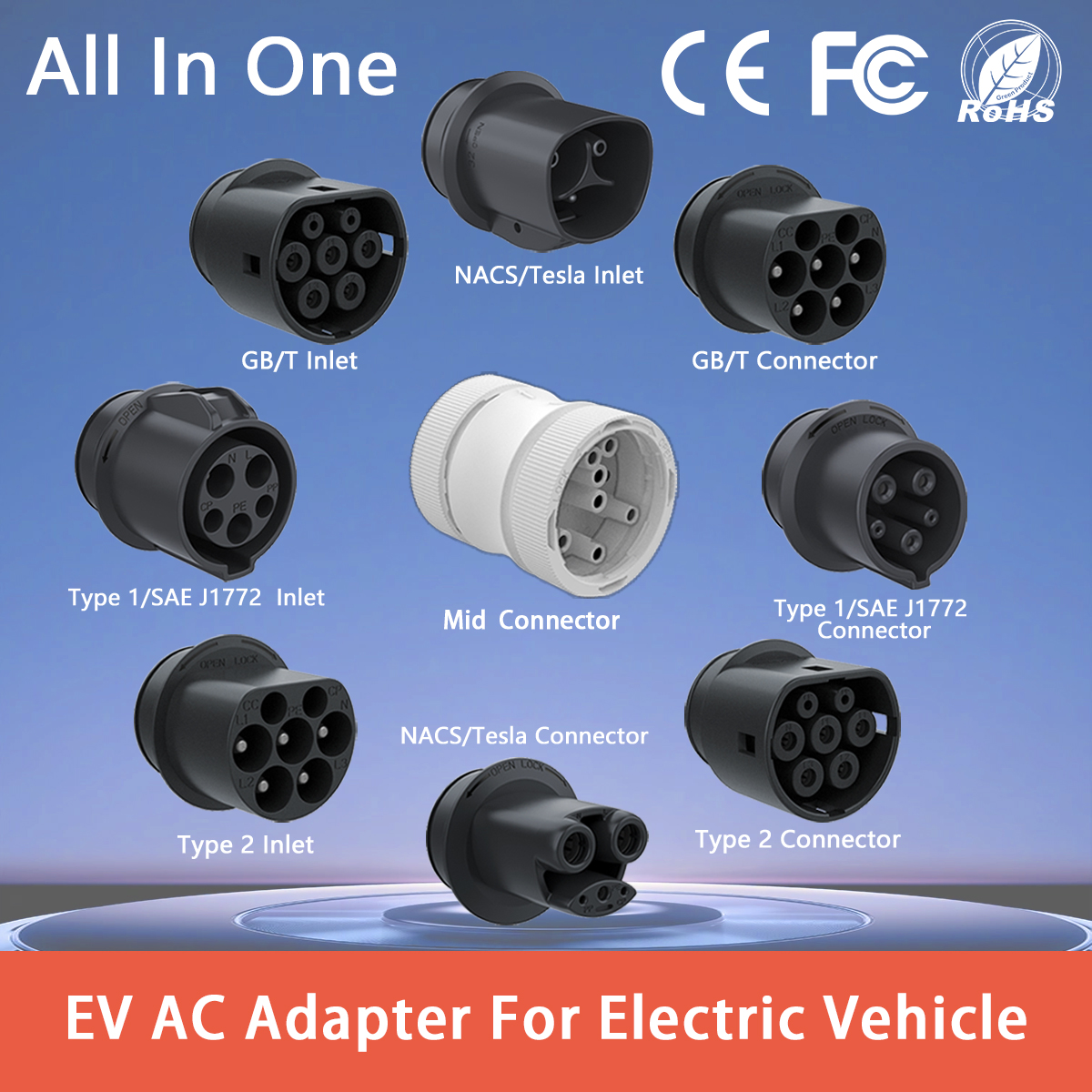
Imagine driving to your grandparents’ farm in rural Ohio or a countryside cottage in southern France, only to see your EV’s battery icon flashing red—with no charging station for miles. For 20% of Americans living in rural areas and millions across Europe’s countryside, this scenario isn’t just frustrating; it’s a major barrier to EV adoption . But here’s the good news: You don’t need to cancel your rural getaway. A portable EV charger paired with the right EV charging adapter turns any standard outlet into a lifeline.
The Rural EV Charging Gap: Why Fixed Stations Fall Short
Rural regions face unique challenges with charging infrastructure. In the U.S., while the Bipartisan Infrastructure Law promises 500,000 chargers nationwide, most installations prioritize highways and urban centers . Across Europe, even though the EU mandates Type 2 connectors as standard, remote villages often lack even basic charging points . This leaves EV owners stranded—unless they come prepared.
“The flexibility of portable chargers addresses the biggest pain point of rural EV ownership,” explains a technical guide from MotorsVista . Unlike fixed stations, these devices adapt to whatever power source is available, whether it’s a 120V household outlet at a farm or a 230V socket at a rural B&B.
How a Portable Charger Works (It’s Simpler Than You Think)
Modern portable chargers are designed for ease of use, even for tech novices. Here’s the breakdown:
- Plug and Play: Most models (like the Lectron 40A or Grizzl-E Mini) connect directly to standard outlets—no professional installation needed .
- Adapter Compatibility: Use a Type 2 to J1772 adapter for European cars traveling in North America, or a CCS2 to Tesla adapter for Tesla owners using public Type 2 stations .
- Safe Charging: Top-tier models meet IET Code of Practice standards, including overcurrent protection and weather resistance (look for IP67 rating) .
In just 30-60 minutes, you can add up to 50 miles of range—enough to reach the next town or extend your stay . For longer stops, overnight charging with a Level 2 portable charger can fully replenish most EV batteries.
Must-Have Accessories: Adapters That Expand Your Reach
The key to seamless rural charging is choosing the right adapters. These are the most searched options for international travelers and rural drivers:
- Type 2 to J1772 adapter: Essential for European EVs (Volkswagen, BMW) using North American outlets .
- CCS1 to CCS2 converter: Bridges the gap between U.S. and EU fast-charging networks .
- NEMA 14-50 to Type 2 adapter: Lets you use RV outlets common in rural U.S. for faster charging .
“Investing in quality adapters ensures compatibility with 90% of global power sources,” notes a product guide from Mida EVSE . Look for models tested to BS 7671 standards for safety .
Top Portable Chargers for Rural Adventures (2025 Picks)
Not all portable chargers are created equal. These models stand out for rural use:
- Grizzl-E Mini ($329): IP67 waterproof rating makes it perfect for muddy farms or rainy countryside trips .
- EV Dance Flux 40A ($289): Lightweight design (under 10 lbs) and carry bag fit easily in your trunk .
- ChargePoint Flex ($649): Smart features let you schedule charging during off-peak hours to save money .
Final Tip: Plan for Success
Before your trip, check two things:
- The outlet type at your destination (NEMA 5-15 in the U.S., Type F in Europe) and pack the corresponding EV plug adapter.
- Your EV’s maximum charging current—match it to your charger (32A or 40A) for optimal speed.
With a portable charger and the right adapters, rural roads become open for EV exploration. As the U.S. Department of Transportation notes, “EVs belong everywhere—including small towns and countryside” . Don’t let a lack of charging stations hold you back.