The Current State of EV Charging Globally
Picture this: It’s a holiday weekend, and you’re stuck in a long line at a highway rest stop charger in Europe or North America. This scene is all too familiar for many EV owners worldwide. As electric vehicles grow in popularity, the challenge of “charging anxiety” has become a key concern. Choosing the right charger adapter isn’t just a matter of convenience—it’s essential to making your EV experience smooth and stress-free, no matter where you are.
A Complete Comparison: Fast Charging VS Slow Charging
1. Speed Difference: Numbers Speak Louder
- Fast Charging: Most DC fast chargers can add 100-200 miles (160-320 km) of range in just 30 minutes. For example, a Tesla Supercharger can charge a Model 3 from 10% to 80% in about 25 minutes.
- Slow Charging: Level 1 chargers (using a standard household outlet) typically add 2-5 miles (3-8 km) per hour. Charging an EV with a 200-mile range overnight (8 hours) would only give you 16-40 miles of range—hardly enough for a full day’s drive.
2. How They Work: The Science Behind Charging
- Fast Charging: DC fast chargers bypass the EV’s on-board converter and send direct current (DC) straight to the battery. This skips the extra step of converting alternating current (AC) to DC, allowing for much faster charging.
- Slow Charging: Level 1 or Level 2 chargers use AC power. The EV’s on-board converter then turns this AC power into DC power to charge the battery—a slower process, but one that’s gentler on the battery.
3. Impact on Battery Life
- Fast Charging: High current from fast chargers can cause “lithium plating” (tiny lithium deposits on the battery’s electrodes) over time. This can reduce the battery’s capacity and lifespan if used too frequently.
- Slow Charging: Lower current means less stress on the battery. Most manufacturers recommend slow charging for daily use to extend battery life—ideal for overnight charging at home.
4. Cost Comparison: Which Is More Affordable?
- Fast Charging: Public fast chargers often cost more—around 0.60 per kWh in the US and €0.40-€0.80 per kWh in Europe. Charging a 75 kWh battery to full could cost 45 or €30-€60.
- Slow Charging: Using a household outlet or Level 2 home charger is cheaper. Off-peak electricity rates (common in many countries) can be as low as
0.10perkWhintheUSor€0.15perkWhinEurope.Afullchargewouldcostjust
Common Mistakes to Avoid When Choosing a Charger Adapter
1. Ignoring Connector Compatibility
Different regions use different charging standards:
- North America: CCS (Combined Charging System) and Type 1 (J1772) for AC charging.
- Europe: CCS and Type 2 (Mennekes) for AC charging.
- Asia: CHAdeMO (common in Japan) and Type 2.
Using an adapter that doesn’t match your EV’s port or the charger’s connector can lead to failed charging or even damage to your vehicle.
2. Blindly Chasing High Power
Higher power (e.g., 350 kW fast chargers) sounds great, but your EV might not support it. Most EVs can only handle up to 150-250 kW. Using a charger with more power than your EV can handle won’t make charging faster—it’ll just waste money. Always check your EV’s maximum charging capacity first.
3. Using Uncertified Adapters
Cheap, uncertified adapters from unknown brands lack safety features like over-temperature protection and short-circuit prevention. In countries like the US (UL certified) or Europe (CE certified), using non-certified products can void your EV’s warranty and pose fire or electric shock risks.
Why Our Convertible EV Charger Adapter Stands Out
1. Universal Compatibility for Global Use
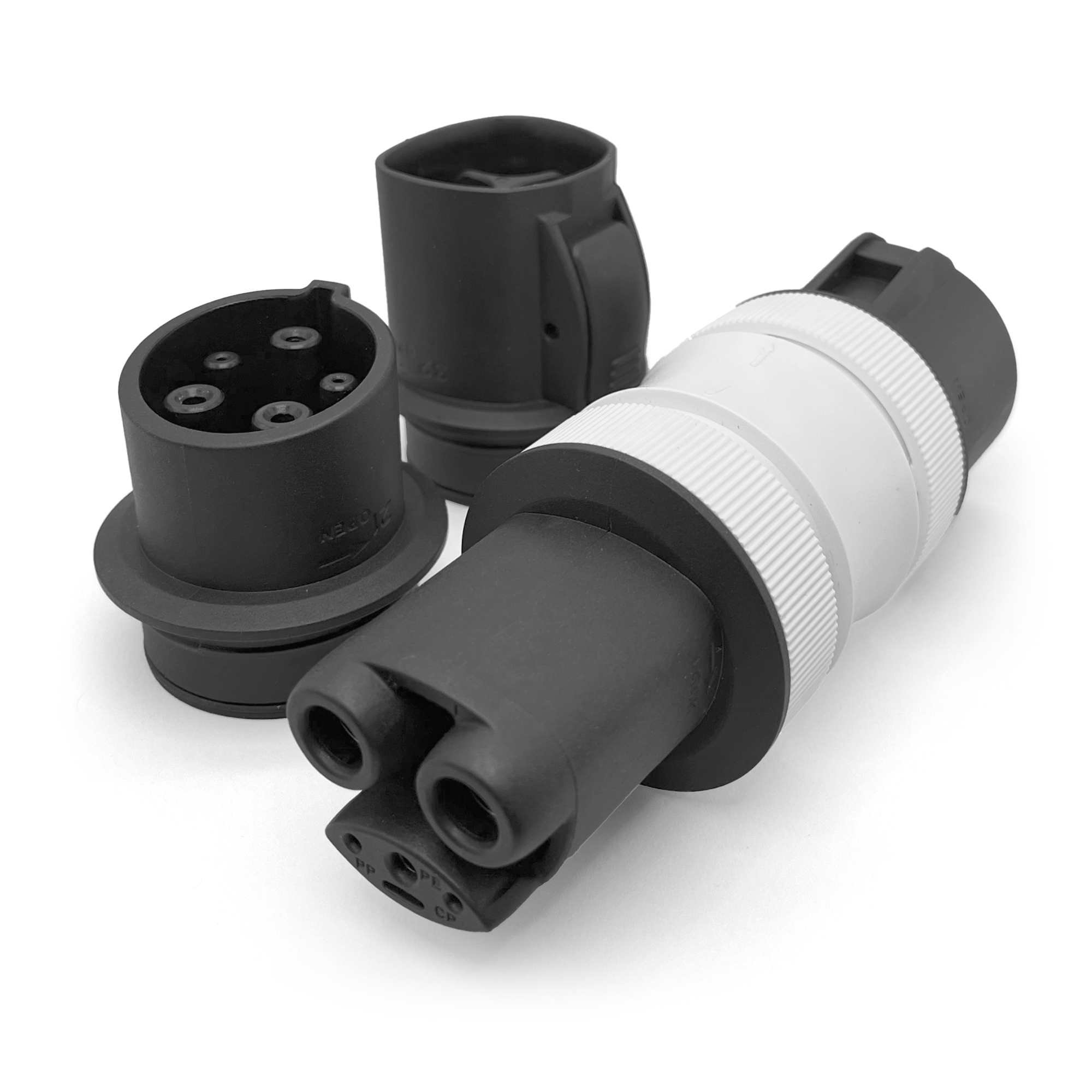
Our adapter features a central “hub” with swappable connectors on both sides. You can easily switch between CCS, Type 1, Type 2, and CHAdeMO connectors—making it work with almost every EV and charger worldwide. Whether you’re driving in California, Germany, or Japan, you’ll never be stuck without a charge.
2. Supports Both Fast and Slow Charging
Need a quick top-up on a road trip? Use the DC fast charging connector. Charging at home overnight? Swap to the AC slow charging connector. One adapter replaces multiple products, saving you space and money.
3. Certified Safety for Peace of Mind
Our adapter is UL-certified (US), CE-certified (Europe), and meets IEC standards (global). It includes built-in protections against overcharging, overheating, and short circuits—so you can charge safely, no matter where you are.
Tips for Using Your EV Charger Adapter Correctly
- Check the Connector Before Plugging In: Ensure the adapter’s connector matches both your EV and the charger.
- Avoid Extreme Temperatures: Don’t leave the adapter in direct sunlight (over 104°F/40°C) or freezing cold (below 32°F/0°C) for long periods.
- Follow the “Plug First” Rule: For public chargers, plug the adapter into the charger first, then into your EV. Unplug in the reverse order.
- Clean the Connectors Regularly: Dirt or debris on the connectors can cause poor contact. Wipe them with a dry cloth every few uses.
Conclusion & Future of EV Charging
Fast charging is perfect for emergencies and road trips, while slow charging is best for daily use and battery health. The key to avoiding “charging anxiety” is choosing an adapter that’s compatible, safe, and flexible.
Our convertible EV charger adapter solves the biggest pain points for global EV owners: compatibility and convenience. As EV charging networks expand (with more 350 kW fast chargers coming online in Europe and North America), our adapter will keep up—ensuring you’re always ready to charge, no matter where your journey takes you.
Join thousands of global EV owners who’ve said goodbye to charging stress. Choose an adapter that works as hard as you do.