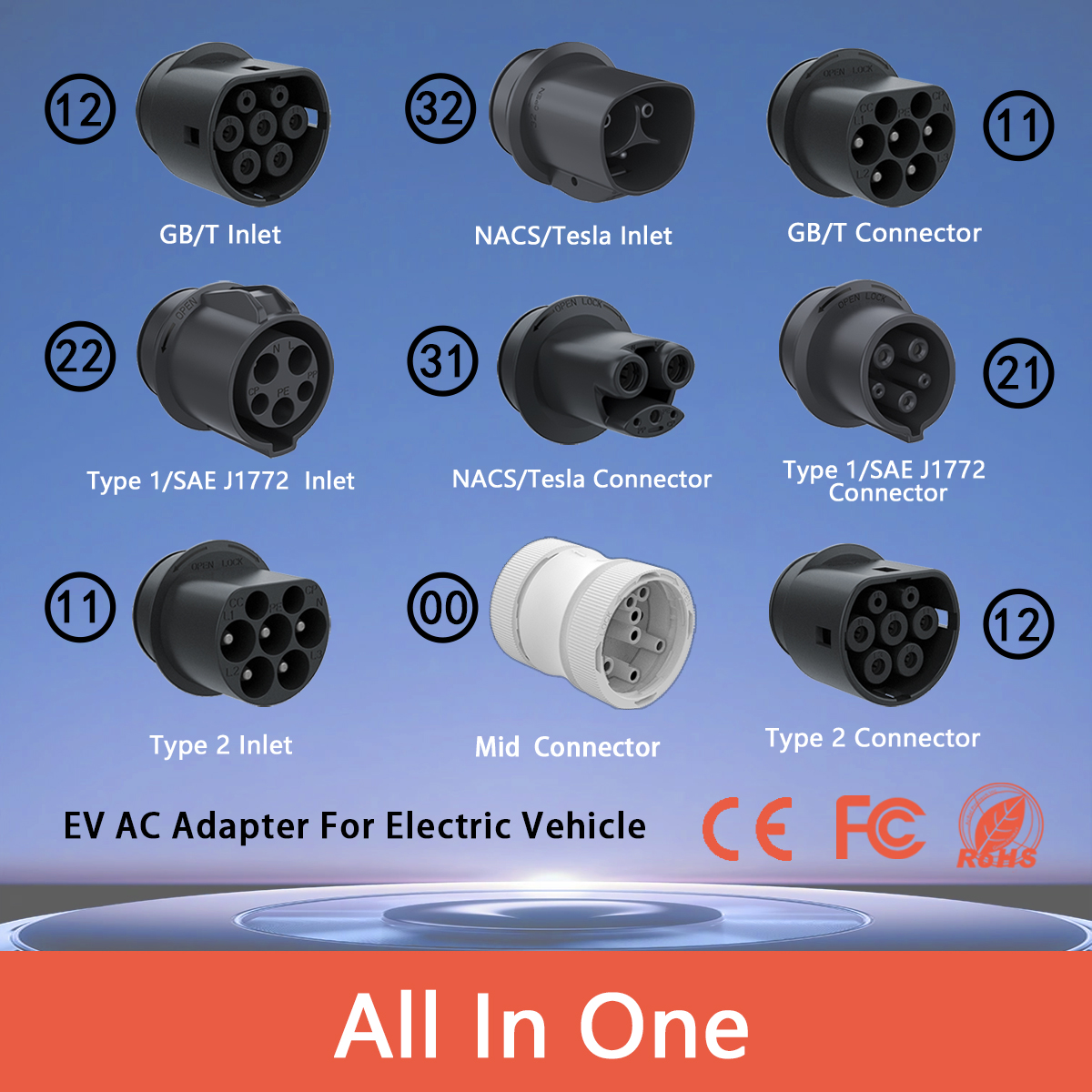
When your electric vehicle (EV) doubles as a mobile power station, outdoor adventures and emergency outages become far more manageable. With a reliable discharge gun and the right EV adapter, you can power camping gear, household essentials, and critical devices—no noisy generator required. Below is your step-by-step guide to safe, effective use, tailored for both weekend campers and emergency preppers.
Modern EVs with Vehicle-to-Load (V2L) technology turn battery storage into a versatile power source. Unlike gas generators, EVs produce zero emissions, run quietly, and avoid carbon monoxide risks (a deadly hazard highlighted by FEMA). For campers, this means brewing coffee, running a portable fridge (like the Dometic CFX3 series popular for outdoor use), or lighting your site without disrupting nature. During blackouts, it can keep phones charged, medical devices running, and small appliances operational—critical for emergency preparedness.
The key to unlocking this potential? A compatible discharge gun and EV adapter (such as J1772-to-Tesla or NEMA 14-50 adapters) to bridge your vehicle’s port with your devices.
Before you start, confirm you have these essentials:
- EV with V2L capability: Most new models (Tesla Model 3/Y, Chevy Blazer EV, Hyundai Ioniq) support this—check your owner’s manual.
- Discharge gun: Ensure it matches your EV’s port (J1772 for non-Tesla, Tesla’s proprietary port for its models).
- EV adapter: For cross-compatibility (e.g., a J1772-to-Tesla adapter if using third-party gear) or to connect to standard outlets.
- Power strip/inverter: Convert DC power to AC for household devices (look for IP54-rated options for outdoor use).
- Battery check: Keep your EV charged to at least 40%—avoid draining below 20% to protect battery health.
Camping with EV power transforms off-grid stays into comfortable getaways. Follow these steps for a seamless experience:
- Park safely: Choose a level spot with shade (to prevent battery overheating) and 10+ feet of clearance around the vehicle.
- Activate V2L mode: On your EV’s touchscreen, navigate to “Power Sharing” or “V2L” and enable the feature (Tesla users can find this in “Controls”).
- Connect the discharge gun: Plug one end into your EV’s charging port—you’ll hear a click when secured.
- Add your adapter (if needed): For non-Tesla EVs using Tesla-compatible gear, attach a J1772-to-Tesla adapter to the discharge gun. For devices needing standard plugs, use a NEMA 14-50 adapter (similar to portable chargers from EVANNEX).
- Link devices: Plug your power strip into the discharge gun/adapter, then connect your gear. Stick to 3-5 devices max (e.g., LED lights, Bluetooth speaker, 75L portable fridge) to avoid overloading.
- Monitor usage: Check your EV’s screen periodically—most show real-time power draw. A Tesla Model Y can typically power camping gear for 8-12 hours on a 50% charge.
Pro tip: Pair with a portable solar panel (like the Jackery Solarsaga 100) to recharge your EV during the day, extending power availability overnight.
During outages, safety and efficiency are priority. Follow FEMA’s guidelines and these steps:
- Park indoors only if necessary: If using the EV inside a garage, keep doors/windows fully open to avoid fumes—generators are dangerous indoors, but even EVs need ventilation.
- Limit to critical devices: Focus on essentials: phones, medical equipment, and a small fridge (to preserve food). Avoid high-wattage items like space heaters.
- Connect securely: Repeat the V2L activation and discharge gun setup from Step 2. Use a heavy-duty extension cord (rated for outdoor use) if devices are far from the vehicle.
- Check battery levels: Reserve 20-30% charge for emergency transportation—you don’t want to strand yourself post-outage.
- Avoid overloading: Most discharge guns handle 3-5kW (up to 40 amps)—check device wattage labels.
- Weather protection: Use IP54/IP55-rated gear (like durable adapters with polyoxymethylene shells) to shield from rain.
- Adapter matching: Always use a high-quality adapter for your EV model—cheap knockoffs risk short circuits or damage.
Your EV adapter is the bridge between your vehicle and gear. For camping, a NEMA 14-50 adapter lets you use standard RV outlets, while a J1772-to-Tesla adapter expands compatibility with third-party discharge guns. Look for adapters with safety features (overheat control, flame-retardant materials) to ensure reliability.
With these steps, your EV becomes more than a car—it’s a camping companion and emergency lifeline. Grab your discharge gun, pack your adapter, and power up with confidence!