
Welcome to Evolado Store
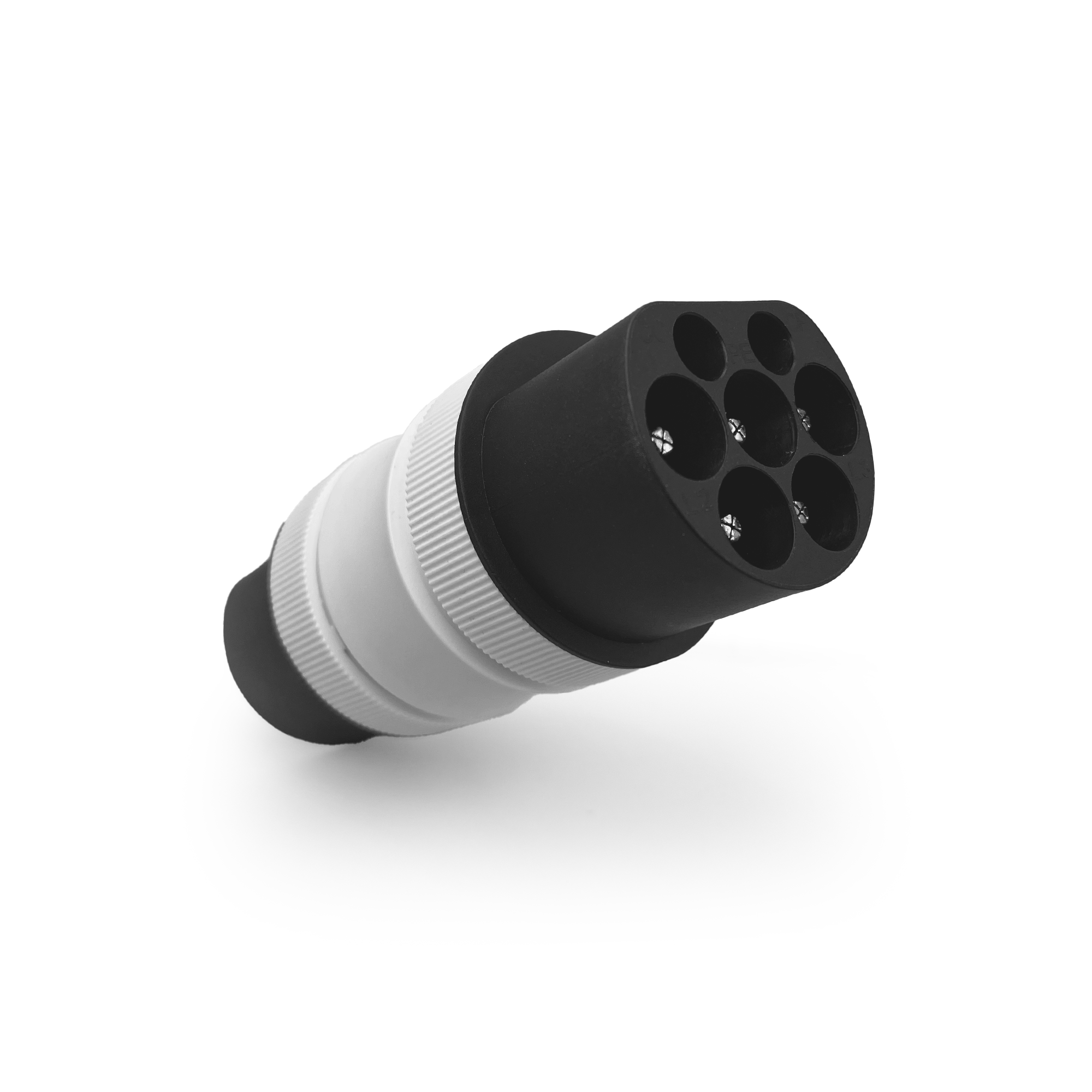
As electric vehicles (EVs) become a mainstream choice for transportation worldwide, many EV owners face a frustrating issue during charging: after finally finding a charging station, plugging in the charging adapter only to see the “incompatible” message pop up repeatedly. While others charge smoothly, you’re left stuck waiting. In fact, the root cause of this “incompatibility” often lies in choosing the wrong charging adapter. Picking a properly compatible adapter not only solves charging problems but also protects your battery life. Let’s break down the key factors in detail.

1. First, Understand: Why Does “Incompatibility” Happen?
Many EV owners assume “incompatibility” is a problem with the charging station or the vehicle itself, so they plug and unplug repeatedly without success. However, the issue usually stems from the adapter, with three common “sticking points”:
1.1 Mismatched Connector Types: Physical Connection Fails First
EV charging connectors come in several common types globally. The most prevalent include CCS (Combined Charging System, widely used in Europe, North America, and many other regions for fast charging), CHAdeMO (popular in Japan and some European models), Type-C (adopted by many new EV brands), and Tesla’s proprietary connector. Charging stations also have two main types of ports: DC fast-charging ports and AC slow-charging ports. If the adapter’s “male connector” (for the charging station) and “female connector” (for the vehicle) don’t match—for example, using a CCS-to-Type-C adapter with a CHAdeMO-equipped charging station—”incompatibility” will inevitably appear.
Take a real example: Owner Mike drives an EV with a CCS port. When charging at a shopping mall, he finds the station only has CHAdeMO fast-charging ports. He grabs the “universal adapter” he bought earlier, but it throws an error as soon as he plugs it in. Later, he realizes his adapter’s female end is CCS-compatible, but the male end only supports AC slow-charging stations—completely incompatible with the CHAdeMO fast-charging port.
1.2 Power Mismatch: Charging System “Rejects” It Actively
Beyond connectors, power rating is an easily overlooked “hidden barrier”. Different EV models have different maximum charging power limits. For instance, one EV may support a maximum DC fast charge of 60kW, but some adapters only have a 30kW power capacity. If you connect this adapter to a 60kW fast-charging station, the vehicle’s charging system will detect the power mismatch and trigger the “incompatible” protection mechanism to avoid battery damage from overloading.
There’s also the opposite scenario of “overkill”: If your EV only supports slow charging (3.5kW) but you use a 60kW fast-charging adapter with a fast-charging station, incompatibility will still occur. It’s not that the adapter is low-quality—it’s just not suited to your vehicle’s power needs.
1.3 Lack of Safety Certifications: Vehicles “Reject” No-Name Products
Some low-cost adapters on the market claim to be “universal” but lack essential safety certifications like CE (for European markets) or UL (for North American markets). Worse, their internal circuit designs may be substandard. EV charging systems have strict safety verification mechanisms that check the adapter’s chip certification and insulation performance. If the adapter fails to meet compliance standards, the system will label it an “unsafe device” and block the connection with an “incompatible” message.
A common case: An owner bought a cheap uncertified adapter to save money. Not only did it fail to charge the vehicle, but it also triggered the EV’s charging system fault light. After taking the car to a service center, the technician explained that the unbranded adapter’s unstable current had activated the vehicle’s safety module—costing the owner hundreds of dollars to fix.

2. Choose the Right Charging Adapter: 3 Non-Negotiable Factors
Now that you know why incompatibility happens, you can focus on these three core factors to avoid 90% of mistakes when selecting an adapter:
2.1 Check Vehicle + Charging Station Connectors First, Match Precisely
The first step is to “match the right fit”: Check your EV’s charging connector type (found in the owner’s manual or labeled directly on the charging port). Next, identify the types of charging stations you use most often—whether home AC slow-chargers, mall DC fast-chargers, or highway service area fast-chargers. Then, choose an adapter where the “male end fits the charging station” and the “female end fits your vehicle”.
For example: If your EV has a CCS port and the shopping mall charging stations near you only have CHAdeMO fast-charging ports, select a “male CHAdeMO (fast-charging) + female CCS” adapter. If you have a home slow-charger but occasionally need to use DC fast-chargers on highways, opt for a “dual-mode” adapter (supports both slow and fast charging)—just confirm both modes’ connectors are compatible.
2.2 Power Rating Should Be “Just Right”: Not Too High, Not Too Low
When choosing power capacity, follow this rule: “Do not exceed the vehicle’s maximum power limit, and do not fall below the power rating of the charging stations you use most.” Here’s how to calculate it:
First, check your EV’s maximum charging power (e.g., the manual states “maximum DC fast charge: 60kW”);
Then, note the power rating of your frequently used charging stations (e.g., 60kW for mall fast-chargers);
The adapter’s maximum power capacity should be ≥ the charging station’s power and ≤ the vehicle’s maximum charging power (e.g., choose a 60kW adapter). This ensures full-speed charging without damaging the battery.
For home slow-charging scenarios, most EVs support 3.5kW or 7kW. An “AC slow-charging dedicated adapter” is sufficient—there’s no need to splurge on a high-power model. Slow charging prioritizes stability, and a high-power adapter will only cost more without adding value.
2.3 Insist on Safety Certifications, Prioritize “Safety Chip” Models
Safety always comes first. When selecting an adapter, verify these two key markers:
Regional Safety Certifications: CE (for Europe), UL (for North America), or other local certifications are mandatory. Avoid any product without these—they pose serious safety risks;
Chip-Level Compatibility: High-quality adapters include built-in compatibility chips that communicate in real time with the EV and charging station systems. These chips accurately transmit power and current data, reducing the chance of incompatibility. For example, our adapters use custom chips that work with over 200 mainstream EV models (including Tesla, Volkswagen, Ford, and Hyundai/Kia), ensuring quick system verification after plugging in.
Additionally, pay attention to the adapter’s materials: The shell should be made of flame-retardant ABS plastic, the cable should use thickened pure copper wires, and the connector should have an IP54 or higher waterproof/dustproof rating. This ensures durability and safety, whether charging outdoors in the rain or plugging/unplugging frequently.

3. Practical Tip: If You See “Incompatible”, Do These 2 Checks First
If you occasionally get an “incompatible” message after plugging in the adapter, don’t rush to replace it. Try these two checks first:
3.1 Inspect Connectors for Dirt or Damage
Dust, rainwater, or worn metal pins on the charging station or EV’s charging port can cause poor contact and false “incompatibility” alerts. Wipe the connectors gently with a dry cloth, then reinsert the adapter—making sure to align the port properly without shaking or forcing it.
3.2 Try a Different Charging Station or Charging Mode
Some older charging stations may use communication protocols that don’t work with newer adapters. In this case, switching to another station can help. If fast charging is incompatible, try slow charging (if your adapter supports dual modes) to see if it works.
If incompatibility persists after these checks, the adapter itself is likely incompatible. It’s time to replace it with one that matches your EV and charging station needs. After all, the right adapter not only solves charging problems but also makes every charging session safer and more efficient.
Final Thoughts
“Incompatibility” during EV charging may seem like a minor issue, but it disrupts your travel plans and even hides safety risks. Choosing the right charging adapter is the key to solving this problem—every detail, from connectors and power rating to safety certifications, matters. Our charging adapters cover mainstream global connectors (CCS, CHAdeMO, Type-C, Tesla-compatible), support charging powers up to 200kW, and meet regional safety standards (CE, UL). We also offer cost-effective options, so every EV owner can say goodbye to “charging troubles” and hit the road with a full battery anytime.