1. Charging an EV with a Household Power Strip: Seems Possible, But Full of Risks
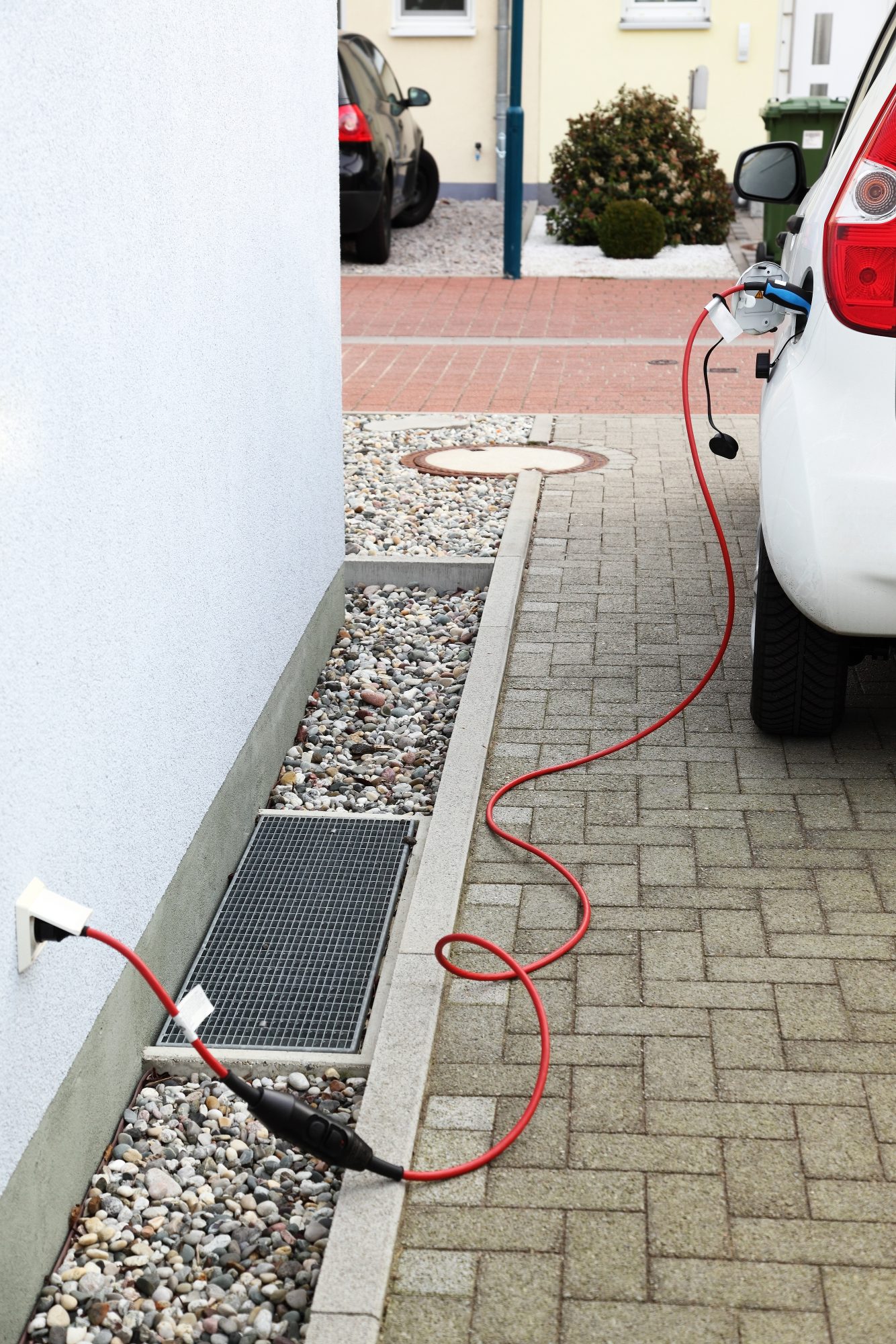
Some EVs support “Level 1 charging” (standard household AC power), which technically allows charging via a 120V (in North America) or 230V (in most of Europe/Asia) household outlet. This leads some owners to try using a regular power strip to connect their EV’s charging cable. However, this practice carries significant safety hazards and is not recommended— a concern echoed by safety authorities worldwide, including initiatives targeting improper charging practices . The risks fall into three main categories:
1.1 Mismatched Current Capacity Leads to Overloading
Most standard household power strips have a rated current of 10A-16A, with a maximum load capacity of around 1200W-3500W (depending on voltage). In contrast, even Level 1 EV charging typically requires 1.4kW-2.4kW (120V, 12A-20A) or 2.3kW-3.7kW (230V, 10A-16A). For EVs that draw closer to the upper end of this range, a regular power strip will be pushed beyond its limits. Over time, this causes the strip’s internal wiring to overheat, melt insulation, and potentially trigger a home circuit breaker trip. In worse cases, it can lead to burnt power strips, short circuits, or even fires— a hazard highlighted in electrical safety guidelines for EV charging .
1.2 Poor Connection Creates Electric Shock Risks
Regular power strips are not designed for the consistent, high-current demands of EV charging. Frequent plugging/unplugging or sustained current flow can loosen connections or oxidize metal contacts, increasing electrical resistance. This not only slows down charging but also generates dangerous electrical arcs (sparks). If flammable materials (like cardboard or clothing) are nearby, these arcs can easily start a fire. Loose connections also raise the risk of electric leakage, putting anyone who touches the strip or charging cable at risk of electric shock— a critical concern in both residential and public charging safety protocols .
1.3 Lack of Safety Features Fails to Handle Emergencies
Basic household power strips only serve as a “power extender”— they do not include safety modules for overcurrent, overvoltage, undervoltage, leakage, or overheating protection. During EV charging, grid voltage fluctuations (e.g., drops during peak hours, surges during thunderstorms), glitches in the EV’s Battery Management System (BMS), or short circuits in the wiring can all occur. Without safety protections, a regular power strip cannot cut off power quickly, leading to damaged EV batteries, burnt charging equipment, or more severe accidents. This gap in protection is why dedicated EV charging equipment is mandated by global safety standards .
2. EV Charging Cables: The “Safety Guardian” of EV Charging
EV charging cables (also called “charging plugs” or “EVSE cables,” where EVSE stands for Electric Vehicle Supply Equipment) are not just simple “power adapters.” They are precision devices with multiple safety features, engineered to meet stringent international standards . Their role in keeping charging safe cannot be overstated, with four key safety functions:
2.1 Real-Time Monitoring Tracks Charging Status
High-quality EV charging cables have built-in sensors for current, voltage, and temperature. These sensors constantly monitor key parameters during charging— a requirement for compliance with modern EV safety certifications like NESTA, which evaluates charging safety as a core dimension . For example:
- If charging current exceeds the cable’s rating (e.g., 16A for Level 1 cables, 32A for Level 2, or 150A+ for DC fast charging), the sensor triggers a current reduction or shutdown.
- If voltage spikes (e.g., from a thunderstorm) or drops (e.g., grid overload) occur, the cable signals the EVSE and EV to adjust or stop charging.
- If the cable’s temperature rises above a safe threshold (usually 60°C-70°C/140°F-158°F), it shuts down power to prevent overheating.
2.2 Multiple Protections Build a Comprehensive Safety Barrier
EV charging cables comply with international standards (such as IEC 62196 for Europe, SAE J1772 for North America, or CHAdeMO for fast charging) . These standards mandate a suite of protections, including:
- Overcurrent protection: Cuts power if current is too high.
- Overvoltage/undervoltage protection: Stops charging if voltage is outside safe limits.
- Leakage protection: Shuts down in 0.1 seconds if leakage is detected (preventing electric shock).
- Overheating protection: Halts charging if the cable or connector gets too hot.
- Lightning protection: Guards against voltage surges from lightning (critical for outdoor charging).
- Anti-misplug protection: For DC fast charging cables, power is cut before the cable can be pulled out during charging, preventing dangerous arcs.
These protections align with the rigorous safety requirements outlined in industry reports like the New Energy Vehicle Electrical Safety Technology Annual Report (2025) .
2.3 Standardized Connectors Ensure Safety and Compatibility
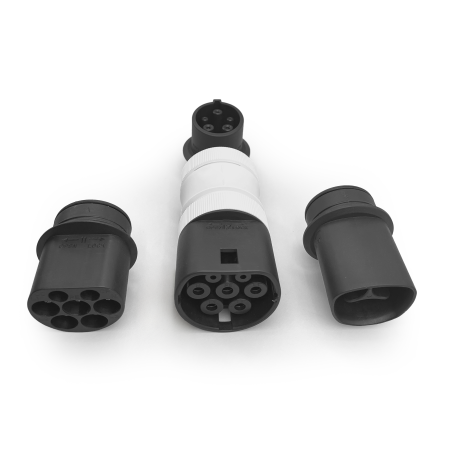
EV charging cables use globally recognized, standardized connectors— a cornerstone of safe and interoperable charging infrastructure . Key examples include:
- SAE J1772: The most common AC connector for Level 1/2 charging in North America, Europe, and many Asian countries. It includes 3 high-voltage terminals (live, neutral, ground) and 2 low-voltage communication terminals for charging status monitoring .
- Type 2 (IEC 62196-2): Popular for AC charging in Europe and some Asian markets, with design features optimized for high-conductivity and durability.
- CCS (Combined Charging System): Combines AC and DC fast charging in one connector (used widely in Europe and North America), built on the IEC 62196 foundation .
- CHAdeMO: A DC fast charging standard used by some Japanese and Korean EV models.
These connectors are made with corrosion-resistant, high-conductivity copper alloys and have rubber gaskets for dust and water resistance (usually IP54 or IP67 rating— safe for outdoor charging in rain). Standardization also ensures compatibility between different EV brands and EVSE, eliminating risks from mismatched, non-compliant connectors .
2.4 Communication Features Enable “Smart Collaboration”
EV charging cables have internal communication wires that link the EVSE (charger) to the EV’s BMS— a critical feature specified in standards like SAE J1772 and IEC 61851 . Here’s how it works:
- Before charging: The EV sends data (remaining battery level, maximum safe current/voltage) to the EVSE via the cable. The EVSE then adjusts its output to match the EV’s needs.
- During charging: The cable continues to transmit real-time data (charging speed, battery temperature) between the two. If the BMS detects a full battery or a problem (e.g., overheating), it sends a “stop charging” signal to the EVSE via the cable.
This collaboration ensures charging is efficient, safe, and avoids overcharging— which can shorten battery life— and is a key focus of quality charging certifications .
3. Practical Charging Tips: Balance Safety and Convenience
To keep your EV charging safe, follow these guidelines aligned with industry best practices :
3.1 Use Dedicated EVSE Whenever Possible
- At home: Install a Level 2 EVSE (240V in North America, 230V in Europe) if your EV supports it. Level 2 chargers come with compliant cables that match your EV’s power needs and have full safety protections. For Level 1 charging (if no Level 2 is available), use the OEM (original equipment manufacturer) cable that came with your EV— not a regular power strip.
- On the go: Choose public chargers from reputable operators (e.g., Tesla Supercharger, ChargePoint, Ionity). Tesla’s Supercharger network, for instance, uses proprietary but highly safe connectors designed for its vehicles . Avoid unbranded or uncertified chargers, as their cables may not meet safety standards.
3.2 Never Use a Regular Power Strip for EV Charging
The only exception is if your EV’s OEM explicitly states it supports “emergency Level 1 charging” with a 10A/120V (North America) or 10A/230V (Europe) power strip— and the charging power is below 1200W/2300W. Even then:
- Use a heavy-duty power strip with a 16A rating and built-in leakage protection.
- Ensure the strip is in good condition (no frayed wires, loose plugs).
- Stay nearby during charging and do not leave it unattended for hours— a precaution emphasized in local safety initiatives targeting improper charging .
3.3 Inspect Your Charging Cable Regularly
Check your EV charging cable every few months for:
- Cracks or damage to the cable jacket.
- Rust or oxidation on the connector’s metal pins.
- Loose or wobbly connections between the cable and plug.
If you notice any issues (e.g., charging stops unexpectedly, the cable feels hot), stop using it immediately. Contact the manufacturer for repairs or a replacement— never try to fix it yourself. This proactive check aligns with recommendations from electric safety experts .
EV charging safety is not just about protecting your vehicle and equipment; it’s about keeping you, your family, and your home safe. Regular household power strips are not designed for EV charging and pose serious risks, as highlighted by safety authorities and industry reports . EV charging cables, by contrast, are engineered with real-time monitoring, multiple protections, standardized connectors, and smart communication to make charging safe and reliable . By prioritizing compliant equipment and following safe practices, you can enjoy the convenience of EV ownership without compromising on safety.
References